Renters face a unique security challenge. You want to protect your apartment, but you cannot drill holes in walls, replace locks without permission, or install anything that will cost you your security deposit. The good news is that the best modern security systems are completely wireless, use adhesive mounting, and move with you when your lease ends. You do not need to own your home to have excellent security.
We evaluated every major security system specifically for renter-friendliness, looking at installation requirements, portability, lease compatibility, and whether you can take the system to your next apartment without buying new equipment. Here are the best options for apartment dwellers in 2026.
What Landlords Actually Allow
Before buying anything, check your lease for language about security modifications. Most leases prohibit drilling, rewiring, and permanent alterations but say nothing about adhesive-mounted devices. In practice, the vast majority of landlords have no issue with wireless security systems that do not damage the unit. A few specific guidelines worth knowing:
Adhesive-mounted sensors and cameras are almost universally fine. Smart locks that fit over existing deadbolts (rather than replacing them) are generally acceptable. Doorbell cameras that mount with adhesive or slip-over brackets typically do not require permission. Security cameras that sit on shelves or use magnetic mounts never require approval.
The one area where you should always ask first is the exterior of the building. Even if you can mount a doorbell camera without drilling, some landlords and HOAs prohibit any visible modifications to common areas or building facades. A quick email to your property manager saves headaches later.
SimpliSafe: Best Overall for Renters
SimpliSafe is practically designed for renters. Every sensor uses peel-and-stick adhesive with Command Strip-style removal tabs that leave no marks. The base station sits on a shelf or counter. There are zero screws, zero holes, and zero damage when you move out. You simply peel the sensors off, pack everything in a box, and reinstall at your next place in under 30 minutes.
The system connects via cellular and WiFi, so you do not need to configure your apartment's router or worry about your landlord's network restrictions. Monitoring is month-to-month starting at $19.99 with no contract, which is critical for renters who may move unexpectedly. A starter kit with a base station, keypad, three entry sensors, and a motion sensor costs around $200.
SimpliSafe also offers an indoor camera that sits on any flat surface, requires no mounting, and covers your apartment without any installation at all. For most renters, a SimpliSafe base kit plus one indoor camera provides comprehensive protection for under $300.
Ring Alarm: Best for Camera Integration
If you want cameras alongside your alarm system, Ring is the best choice for renters. Ring's indoor cameras, stick-up cameras, and the Ring Indoor Cam all work without mounting — they sit on shelves, counters, or window sills. The Ring Alarm sensors use adhesive mounting identical to SimpliSafe, and the entire system moves with you.
The Ring Protect Plus plan at $20 per month covers unlimited cameras and the alarm system in one subscription, which is excellent value if you have multiple devices. Ring's app also includes a Neighbors feature that shows crime and safety alerts in your area, which is especially useful for renters who may not know their neighborhood well.
Wyze Home Monitoring: Best Budget Option
Wyze offers the most affordable complete security system on the market, and it is fully renter-friendly. The Wyze Home Monitoring Core Kit includes a hub, keypad, two entry sensors, and a motion sensor for $99. Professional monitoring with Noonlight dispatch costs just $9.99 per month — less than half what SimpliSafe and Ring charge.
The equipment is basic but functional. Sensors are small and use adhesive mounting. The hub plugs into any outlet and connects via WiFi. Wyze cameras, which start at $25, can be added to the system and placed anywhere without mounting. The biggest limitation is that Wyze's cellular backup costs extra, and the system relies primarily on WiFi, which is less reliable than SimpliSafe's dual-path approach.
For a renter on a tight budget who still wants professional monitoring and police dispatch, Wyze is hard to beat. You can get a complete system with monitoring for under $220 in the first year.
Smart Locks That Do Not Replace Your Deadbolt
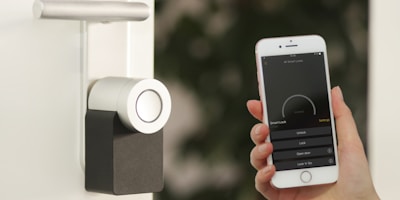
Replacing your apartment's deadbolt with a smart lock usually violates your lease. But several smart locks fit over your existing deadbolt without any modification. The August WiFi Smart Lock and the Level Lock both install on the interior side of your door, leaving the exterior hardware completely untouched. Your landlord's key still works, and there is nothing visible from outside.
These over-the-deadbolt locks let you lock and unlock your door with your phone, set auto-lock timers, and give temporary access codes to guests — all without changing the lock or drilling any holes. Installation takes about 10 minutes with a screwdriver. When you move, you reinstall the original thumb turn and take the smart lock with you.
If you are in a building with a shared entrance, a video doorbell or intercom may not be practical. In that case, a smart lock combined with an indoor camera pointed at your front door gives you a similar level of entry monitoring.
Portable Sensors and Standalone Devices
Not every renter needs a full security system. If you want basic protection without a monthly commitment, standalone devices can cover the essentials. A WiFi camera like the Blink Mini 2 ($30) gives you live video and motion alerts. A portable door alarm like the GE Personal Security Alarm ($10) emits a 120-decibel siren if the door opens. Window alarms with adhesive mounting cost under $5 each and work without any hub or subscription.
These standalone devices do not call the police for you, but they do alert you immediately and create enough noise to scare off most intruders. For renters who move frequently or are only in a unit for a few months, this grab-and-go approach is the most practical and cost-effective option.
Tips for Apartment Security Beyond Devices
Technology is only part of apartment security. Simple habits make a bigger difference than most people realize. Always lock your door — even when you are home and especially in buildings with shared hallways. Use your door's peephole or chain before opening to strangers. Keep sliding doors secured with a bar or dowel in the track. Never buzz in someone you do not recognize.
Get to know your neighbors. Apartments with residents who recognize each other and notice unfamiliar faces are significantly safer than buildings where everyone is anonymous. A simple introduction to the people on your floor costs nothing and adds a layer of community awareness that no camera can replace.
Finally, document your valuables. Take photos of electronics, jewelry, and anything of value, and store the serial numbers in a cloud document. If something is stolen, this documentation makes the police report and insurance claim dramatically easier to process.